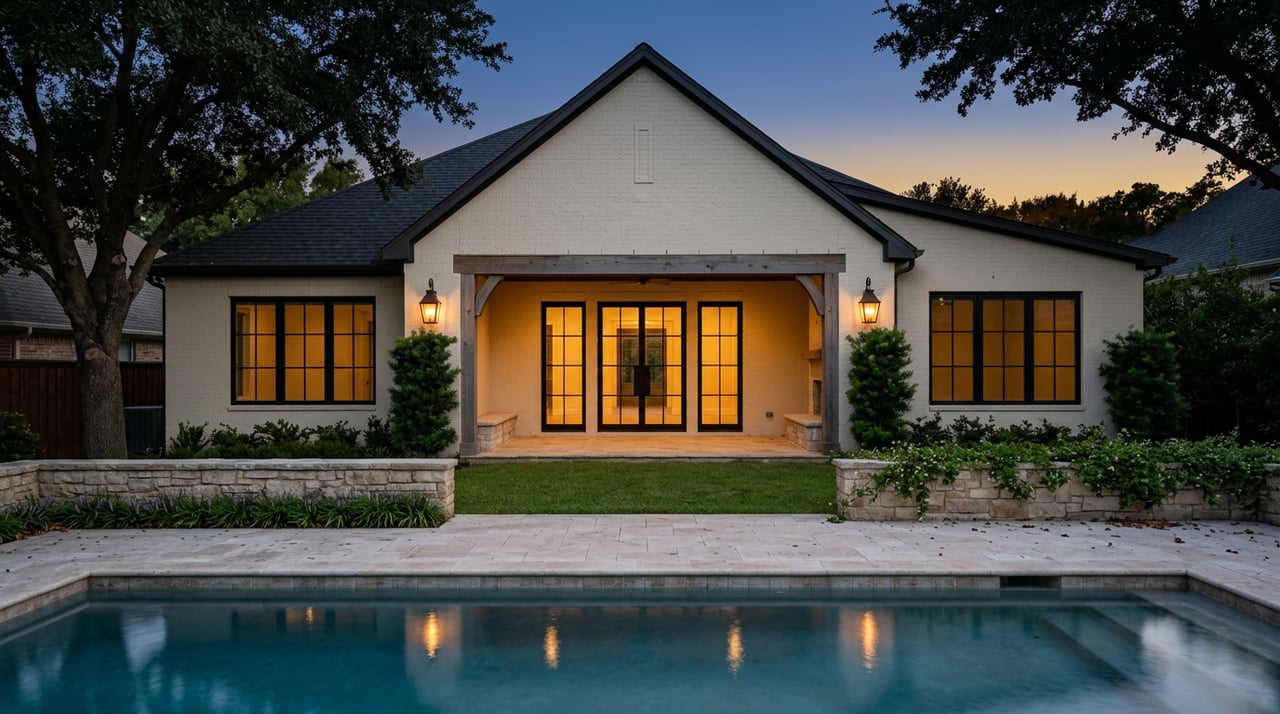
A title company runs its search two weeks into escrow and finds a document sitting against the property that nobody mentioned at the listing appointment. It isn't a lien. It isn't a lawsuit. It's a Notice of Non-Compliance, recorded years ago in the Montgomery County Real Property Records, tied to a pool or a patio cover that was built without the final sign-off it needed. The seller is confused, because as far as they knew, The Woodlands doesn't have a building department to answer to in the first place.
They're right about that part. And that's exactly why the document exists.
No City Hall Doesn't Mean No Rules
The Woodlands is not an incorporated city. It's a special purpose district, and the Township itself is explicit that it does not pass ordinances and does not run a traditional code enforcement office the way a municipality would. Most residents already sense this. It's part of why the area has a reputation for lighter government and lower friction than a typical Houston suburb.
But the absence of a building department was never the absence of rules. It's the substitution of a different mechanism for the same job. Every property in The Woodlands is subject to a set of Covenants, originally written by three now-dissolved organizations, The Woodlands Community Association, The Woodlands Association, and The Woodlands Commercial Owners Association. In 2010, oversight of those Covenants passed to The Woodlands Township as part of a governance transition, and the Township's Covenant Administration Department has run the program ever since.
The Township funds itself through property taxes and assessments rather than the traditional HOA dues structure most transplants expect, which is another reason people assume the rules are looser here than they actually are. The enforcement tool just lives somewhere different than a homeowner from a conventional city would think to look.
What Actually Has to Happen Before You Build Anything
Under the Covenants, any placement, construction, alteration, or repair of a permanent or temporary structure on a lot with an existing single-family home requires prior written approval before work starts. That covers additions, garages, pools, patio covers, fences, and detached structures with living space. It does not require a survey for painting, re-roofing, or similar work that doesn't add or expand a structure, but for anything more substantial, an approved survey showing easements, building lines, and proposed improvements is part of the file.
Each developed village runs its own Residential Design Review Committee, made up of at least three resident volunteers elected to one-year terms, meeting monthly to review applications. On top of the general Standards, every village layers its own Neighborhood Criteria covering setbacks, hard-surface area limits, colors, and materials, and where the two conflict, the Criteria usually wins. That means the same pool enclosure that sails through approval in one village might need a different application in the one next door.
A refundable compliance deposit is collected up front, sized to the complexity of the project. It comes back once the work is verified. It doesn't come back if the owner never finishes the verification step.
The Step Sellers Forget Exists
Here's where the mechanism becomes a closing problem instead of a paperwork inconvenience. For larger projects, meaning a new dwelling, a garage, a detached structure with living area, or an addition to an existing one, the Covenants require a Qualified Inspector to sign off before the file can close out. That inspector has to be a third party: a licensed architect, a registered structural engineer, or an ICC-certified building inspector, and specifically not the contractor, the contractor's employees, or anyone connected to whoever did the work.
Once that inspector certifies the improvement matches the approved plans and the current Standards, the Plan Review Committee can issue a Certificate of Compliance and the compliance deposit gets released. The certificate itself only reflects what the owner or inspector reported. Nobody else, including a future buyer, is entitled to treat it as proof the structure is safe or code-compliant in any broader sense. It closes the Township's file. It doesn't warranty the work.
The Township's own Residential Development Standards spell out what happens next. If the owner never submits that final certification, the Township can record a notice of non-compliance directly in the Montgomery County Real Property Records, attached to the property rather than to a case file that expires or gets forgotten.
That's the mechanism in plain terms. The homeowner builds the pool, gets initial approval, finishes construction, and then never circles back to submit the paperwork that closes the file. Years pass. The compliance deposit sits unreturned or gets forfeited. Nothing about daily life changes, because there's no building inspector showing up to check. Then the home goes under contract, a title search runs, and the recorded notice surfaces at the exact moment the seller needs a clean closing timeline.
The Township's remedies don't stop at the recorded notice, either. It or any covenant-bound neighbor can file suit for an injunction compelling compliance, and after proper notice, the Township can enter the property, fix or remove the violation itself, and bill the owner or draw against the compliance deposit for the cost.
What This Costs a Seller Who Doesn't Check First
| Improvement type | Approval required before building | Final step that often gets skipped |
|---|---|---|
| Pool or spa | Written plan approval from village RDRC | Final certification submitted and Certificate of Compliance issued |
| Room addition or detached living space | Written plan approval, survey showing setbacks | Third-party Qualified Inspector sign-off before deposit release |
| Patio cover or pergola | Written plan approval | Final certification submitted before deposit release |
| Fence | Written plan approval per Neighborhood Criteria | Confirmation the fence matches approved height, material, and setback |
| Painting or re-roofing | Color or product samples, no survey required | No final certification step in most cases |
The pattern across the first four rows is the same. Approval at the start is the easy part. Most owners get it. The gap opens at the finish line, when the paperwork that closes the file out gets set aside because nobody's checking, until a buyer's title company checks for them.
Before You List, Do the Thirty-Minute Version of Due Diligence
If your home in The Woodlands has had a pool installed, a room added, or a structure built anytime in the years you've owned it, the fix here is straightforward and cheap compared to discovering the problem mid-escrow.
Call the Covenant Administration Department and ask directly whether a Certificate of Compliance was ever issued for the work, and whether the compliance deposit on file was released. If it wasn't, ask what's needed to close the file now, before a buyer's title search finds it for you. If a Notice of Non-Compliance is already recorded, resolving it before you list is a conversation with the Township, not a surprise for your buyer's attorney to untangle at the closing table.
This is the kind of detail that separates a listing that closes on schedule from one that gets pushed thirty days while everyone scrambles to get a third-party inspector out to sign a form that should have been signed years ago. It's a small thing to check. It's a large thing to discover late.
A Few Questions Worth Asking Before You List
Does this apply to every village in The Woodlands? The Covenants and the base Standards apply Township-wide, but the Neighborhood Criteria layered on top vary by village, and in a conflict, the Criteria typically controls over the general Standards. Confirming which rules apply to your specific lot means checking with Covenant Administration rather than assuming your neighbor's experience matches yours.
What if I bought the house with the improvement already in place? The obligation runs with the property, not the person who built it. If the previous owner never obtained final certification, the open file and any recorded notice are still attached to the home, which is exactly why a pre-listing check matters even if you weren't the one who poured the concrete.
Is this the same as a city code violation? Not quite. There's no municipal building department issuing citations here. The consequence runs through the Covenants: a recorded notice, potential injunctive action, and forfeiture of the compliance deposit, rather than a city fine. The paperwork trail ends up in the same place a buyer's title search would look, which is what makes it feel like a code issue even though it technically isn't one.
Selling a home in The Woodlands rewards sellers who know exactly which local mechanisms are in play long before a buyer's team finds them first. That's the kind of groundwork that keeps a closing date intact instead of turning it into a moving target.
If you're weighing a sale in The Woodlands and want a clear-eyed read on your home's value and what to check before you list, Robin Bailey has spent more than thirty years handling exactly these details for northeast Houston sellers. Request your free home valuation and get a straight answer on timeline, pricing, and what needs a second look before your sign goes in the yard.